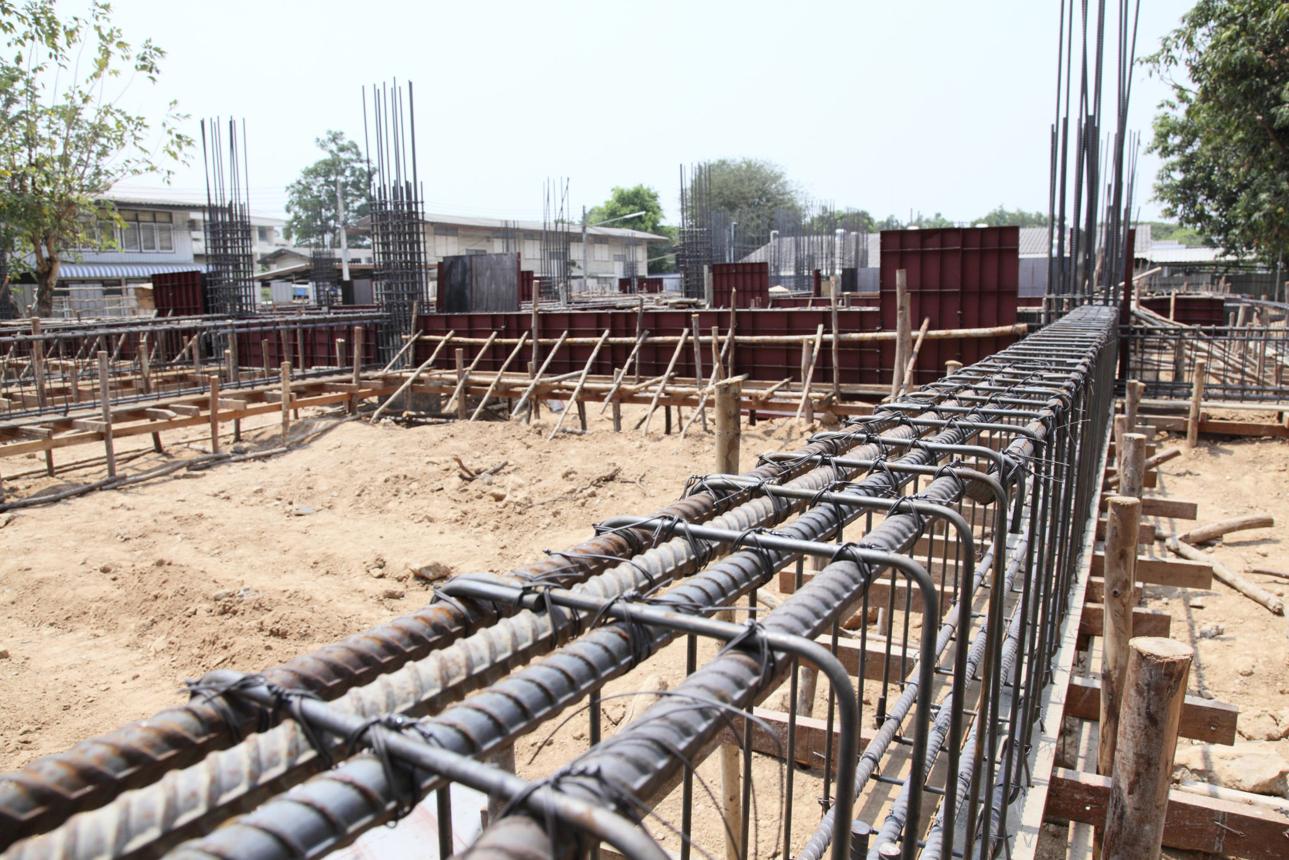

Introduction to Bar Bending Schedule Calculation
In modern construction projects, accurate steel estimation plays a vital role in controlling costs and reducing material wastage. One of the most effective tools used for this purpose is the Bar Bending Schedule (BBS).
A Bar Bending Schedule is a detailed document that specifies the shape, size, length, quantity, and weight of reinforcement bars required in a structure. As a result, engineers can estimate steel consumption more accurately and plan procurement efficiently.
I also recommend all Fresher Civil Engineer to Read this – Key Notes for Site Engineer’s , It will help you to enhance your knowledge

Moreover, a properly prepared BBS helps site engineers avoid costly mistakes during fabrication and installation. Whether you are working on beams, slabs, columns, footings, or water tanks, understanding Bar Bending Schedule Calculation is essential.
In this comprehensive guide, you will learn how to prepare a Bar Bending Schedule step by step using practical examples and industry-standard formulas.
Why is Bar Bending Schedule Important?
Every construction project relies heavily on reinforcement steel. Therefore, even a small error in steel quantity estimation can significantly impact the project budget.

A well-prepared Bar Bending Schedule offers several advantages:
- Provides accurate steel quantity estimation.
- Minimizes reinforcement wastage.
- Improves project planning and scheduling.
- Simplifies procurement activities.
- Enhances quality control during construction.
- Reduces overall project costs.
- Speeds up fabrication and installation work.
Furthermore, contractors can use the schedule to monitor steel consumption and compare actual usage against planned quantities.
Components of a Bar Bending Schedule
Before starting the calculation process, it is important to understand the information included in a typical BBS.
Generally, a Bar Bending Schedule contains:
- Bar Mark Number
- Bar Diameter
- Shape Code
- Number of Bars
- Cutting Length
- Total Length
- Unit Weight
- Total Weight
Consequently, all reinforcement details remain organized in a single document, making verification much easier.
Step 1: Study Structural Drawings Carefully
The first step in Bar Bending Schedule Calculation is reviewing the structural drawings.
At this stage, engineers should carefully examine:
- Beam reinforcement drawings
- Column reinforcement drawings
- Slab reinforcement layouts
- Footing reinforcement details
- Structural sections
- Reinforcement schedules
In addition, special attention should be given to lap lengths, anchorage lengths, bends, hooks, and development lengths.
Once these details are identified, the calculation process becomes much more accurate.
Step 2: Calculate the Number of Reinforcement Bars
After reviewing the drawings, the next step involves determining the number of bars required.
The formula is:
Number of Bars = (Width ÷ Spacing) + 1
Example
Assume a slab width of 5000 mm and a bar spacing of 150 mm.
Number of Bars = 5000 ÷ 150 + 1
Number of Bars = 34
Therefore, 34 reinforcement bars will be required for the slab.
Step 3: Determine the Cutting Length
The cutting length is one of the most important parameters in a Bar Bending Schedule.
Simply measuring the structural member length is not sufficient. Instead, engineers must consider additional factors such as:
- Concrete cover
- Hooks
- Anchorage length
- Development length
- Bend deductions
As a result, the final cutting length accurately reflects the actual bar required on site.
General Formula
Cutting Length = Structural Length + Anchorage Length + Hook Length − Bend Deductions
Step 4: Calculate Steel Weight
Once the total length of reinforcement is known, calculating the steel weight becomes straightforward.
The standard formula used throughout the construction industry is:
Weight (kg) = (D² ÷ 162) × Length
Where:
- D = Diameter of bar in mm
- Length = Total bar length in meters
For example, if a 12 mm diameter bar has a total length of 119.20 m:
Weight = (12² ÷ 162) × 119.20
Weight = 105.85 kg
Consequently, the total steel requirement for that reinforcement bar is approximately 106 kg.
Common Mistakes in Bar Bending Schedule Calculation
Even experienced engineers can make mistakes during BBS preparation. However, most errors can be avoided through proper checking.
Some common mistakes include:
- Ignoring concrete cover.
- Using incorrect hook lengths.
- Missing lap length calculations.
- Applying wrong bend deductions.
- Incorrect bar spacing calculations.
- Using the wrong steel diameter.
- Failing to verify drawing revisions.
Therefore, every Bar Bending Schedule should be reviewed before issuing it for fabrication.
How to Use ChatGPT for Construction Billing: Complete Guide for Contractors and Engineers
Conclusion
A properly prepared Bar Bending Schedule Calculation is essential for accurate reinforcement estimation and effective project management. Not only does it reduce material wastage, but it also improves cost control and construction efficiency.
Furthermore, BBS serves as a valuable communication tool between designers, quantity surveyors, contractors, and site engineers. By following the step-by-step process explained in this guide, construction professionals can prepare reliable schedules and optimize steel usage across their projects.
Ultimately, mastering Bar Bending Schedule Calculation is a crucial skill for every civil engineer involved in reinforced concrete construction.
 20
20
 620
620
 20
20
Hi, I’m Vivek Mishra, Founder of TheTechFace. I am a Civil Engineer and digital content creator with a B.Tech from SRM University (2013) and an MBA (2023). My passion for technology and blogging began during my college years, leading me to create several websites and online platforms.
With over a decade of experience in both engineering and blogging, I write about Technology, AI, Gadgets, Cricket, Civil Engineering, Business, SEO, and digital trends. Through TheTechFace, my goal is to share practical, informative, and easy-to-understand content that helps readers stay informed and make better decisions in a rapidly evolving digital world.