
RCC vs Steel Structure Cost Comparison Introduction
Choosing the right structural system is one of the most important decisions in any construction project. Whether you are planning to build a residential house, commercial complex, warehouse, factory, or institutional building, the choice between Reinforced Cement Concrete (RCC) and Steel Structure significantly affects the project’s cost, construction time, durability, and long-term maintenance. Many property owners and developers often search for an accurate RCC vs Steel Structure Cost Comparison to determine which option offers the best value for money.
Both RCC and steel structures have unique advantages and limitations. RCC is widely used in residential and high-rise buildings because of its excellent durability, fire resistance, and lower maintenance requirements. On the other hand, steel structures are preferred for industrial buildings, warehouses, airports, and commercial complexes because of their high strength, lightweight construction, and faster installation. Understanding the differences between these two structural systems can help you make an informed decision based on your budget, project type, and future requirements.
What is an RCC Structure?
Definition
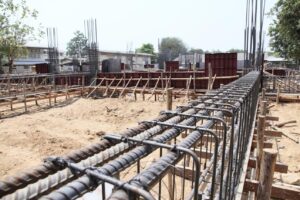
Reinforced Cement Concrete (RCC) is a composite material made by combining cement, sand, aggregates, water, and steel reinforcement bars (rebars). Concrete provides excellent compressive strength, while steel reinforcement improves tensile strength, making RCC one of the most reliable construction materials used worldwide.
Common Applications
RCC structures are commonly used for:
- Residential Houses
- Apartments
- Schools
- Hospitals
- Government Buildings
- Multi-storey Buildings
- Bridges
RCC has remained the preferred construction method in India for decades due to its long service life, excellent fire resistance, and availability of construction materials.
What is a Steel Structure?
Definition
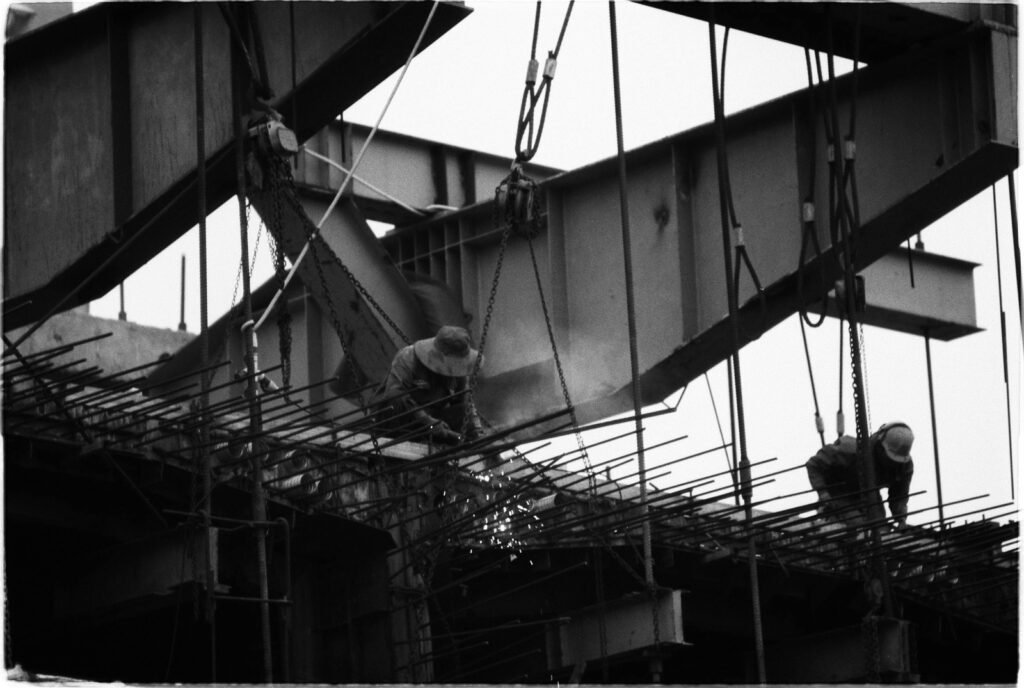
A steel structure consists of fabricated steel members such as columns, beams, trusses, and braces that are connected using welding or bolting. These components are manufactured in factories under controlled conditions and assembled at the construction site.
Common Applications
Steel structures are widely used in:
- Warehouses
- Industrial Plants
- Factories
- Shopping Malls
- Airport Terminals
- Commercial Buildings
- Large Exhibition Halls
Steel structures are particularly suitable for projects requiring long spans, flexible layouts, and rapid construction.
RCC vs Steel Structure Cost Comparison
The initial construction cost is often the deciding factor when selecting a structural system. However, evaluating only the upfront expense can be misleading because lifecycle costs—including maintenance, repairs, and project duration—also play a significant role.
In India, RCC structures generally have a lower initial cost for residential buildings because cement, sand, and aggregates are readily available and comparatively economical. Steel structures, while often involving a higher material cost, can reduce overall project expenses for industrial and commercial buildings through faster construction, reduced labor requirements, and lighter foundations.
| Parameter | RCC Structure | Steel Structure |
| Initial Cost | Lower for residential buildings | Higher material cost |
| Construction Speed | Moderate to Slow | Fast |
| Labour Requirement | High | Lower |
| Foundation Load | Heavy | Lightweight |
| Maintenance | Low | Moderate |
| Fire Resistance | Excellent | Requires fire protection |
| Earthquake Performance | Good | Excellent |
| Flexibility for Future Expansion | Limited | High |
| Typical Applications | Houses, Apartments, Schools | Warehouses, Factories, Commercial Buildings |
Although steel prices fluctuate with market conditions, the shorter construction period often results in lower indirect costs, especially for large industrial projects where time is critical.
Construction Time Comparison
Why Construction Speed Matters
Time is money in the construction industry. Delayed projects increase labor costs, equipment rental charges, financing expenses, and overheads.
Steel structures offer a significant advantage because most structural components are fabricated off-site while foundation work is carried out simultaneously. Once the steel members arrive at the site, installation is quick and efficient.
RCC construction, on the other hand, involves shuttering, reinforcement placement, concrete pouring, and curing. These sequential activities require more time before the structure reaches full strength.
For projects where rapid completion is essential, such as warehouses, industrial sheds, and commercial buildings, steel structures are usually the preferred choice.
Durability and Maintenance
Durability is another important factor in the RCC vs Steel Structure Cost Comparison.
RCC structures are highly resistant to fire, moisture, and weather when properly designed and constructed. They generally require minimal maintenance and can remain functional for decades with periodic inspections.
Steel structures possess excellent strength but require corrosion protection through painting, galvanization, or protective coatings, especially in coastal or humid environments. Regular maintenance is essential to preserve structural integrity and extend service life.
With proper maintenance, both RCC and steel structures can provide excellent long-term performance.
Which Structure Should You Choose?
Choose RCC Structure If:
- You are constructing a residential house.
- Fire resistance is a priority.
- You want lower maintenance costs.
- Long-term durability is important.
- The project has conventional room layouts.
Choose Steel Structure If:
- You need fast project completion.
- The building requires large column-free spaces.
- Future expansion is expected.
- The project is an industrial or commercial facility.
- Earthquake resistance is a major consideration.
The right choice depends on your project requirements rather than cost alone. A structural engineer should evaluate factors such as building use, soil conditions, span requirements, and local construction costs before finalizing the structural system.
How to Identify Main Bar and Cross Bar in BBS (Easy Method)
Conclusion
When comparing RCC vs Steel Structure Cost Comparison, neither option is universally better. RCC remains the preferred solution for most residential and institutional buildings due to its durability, fire resistance, and lower maintenance requirements. Steel structures, however, offer unmatched advantages in speed, flexibility, and long-span construction, making them ideal for warehouses, factories, and commercial projects.
Before making a final decision, consider not only the initial construction cost but also the building’s intended use, maintenance expenses, construction schedule, and long-term operational requirements. A well-planned structural system can significantly improve the safety, performance, and cost-effectiveness of your building.
 20
20
 620
620
 20
20
Hi, I’m Vivek Mishra, Founder of TheTechFace. I am a Civil Engineer and digital content creator with a B.Tech from SRM University (2013) and an MBA (2023). My passion for technology and blogging began during my college years, leading me to create several websites and online platforms.
With over a decade of experience in both engineering and blogging, I write about Technology, AI, Gadgets, Cricket, Civil Engineering, Business, SEO, and digital trends. Through TheTechFace, my goal is to share practical, informative, and easy-to-understand content that helps readers stay informed and make better decisions in a rapidly evolving digital world.