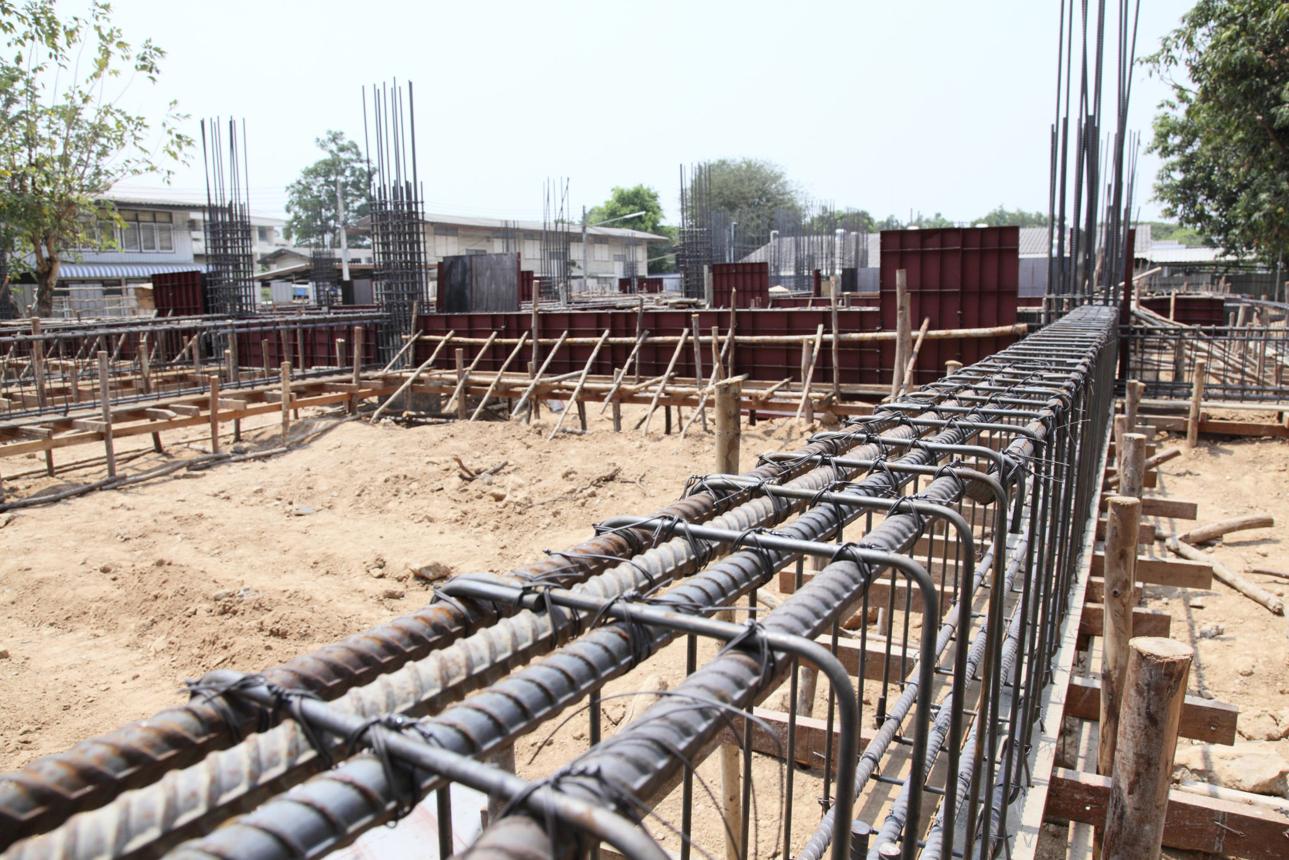
Calculating the correct quantity of cement, sand and coarse aggregate is an important part of construction work. Accurate material estimation helps reduce wastage, control project costs and ensure that the required materials are available at the site when needed.
Whether you are calculating materials for RCC concrete, PCC, plastering, flooring or other construction activities, the basic calculation method is simple once you understand the dry volume, mix ratio and material proportions.
In this guide, we will explain how to calculate cement, coarse sand and coarse aggregate step by step. We will also provide practical examples and an online calculator to make material estimation easier.
Why Accurate Material Calculation Is Important
Material calculation is an essential part of construction planning. Ordering too much material can increase storage requirements and wastage, while ordering too little can interrupt construction work.
Proper calculation helps with:
- Accurate project budgeting
- Reduction in material wastage
- Better site planning
- Estimation of cement bags
- Estimation of sand and aggregate
- Preparation of material purchase orders
- Concrete and plaster quantity estimation
- Monitoring material consumption
The actual mix proportion should always follow the approved mix design, project specifications and applicable standards. Nominal mix ratios should not be used where a designed concrete mix is specified.
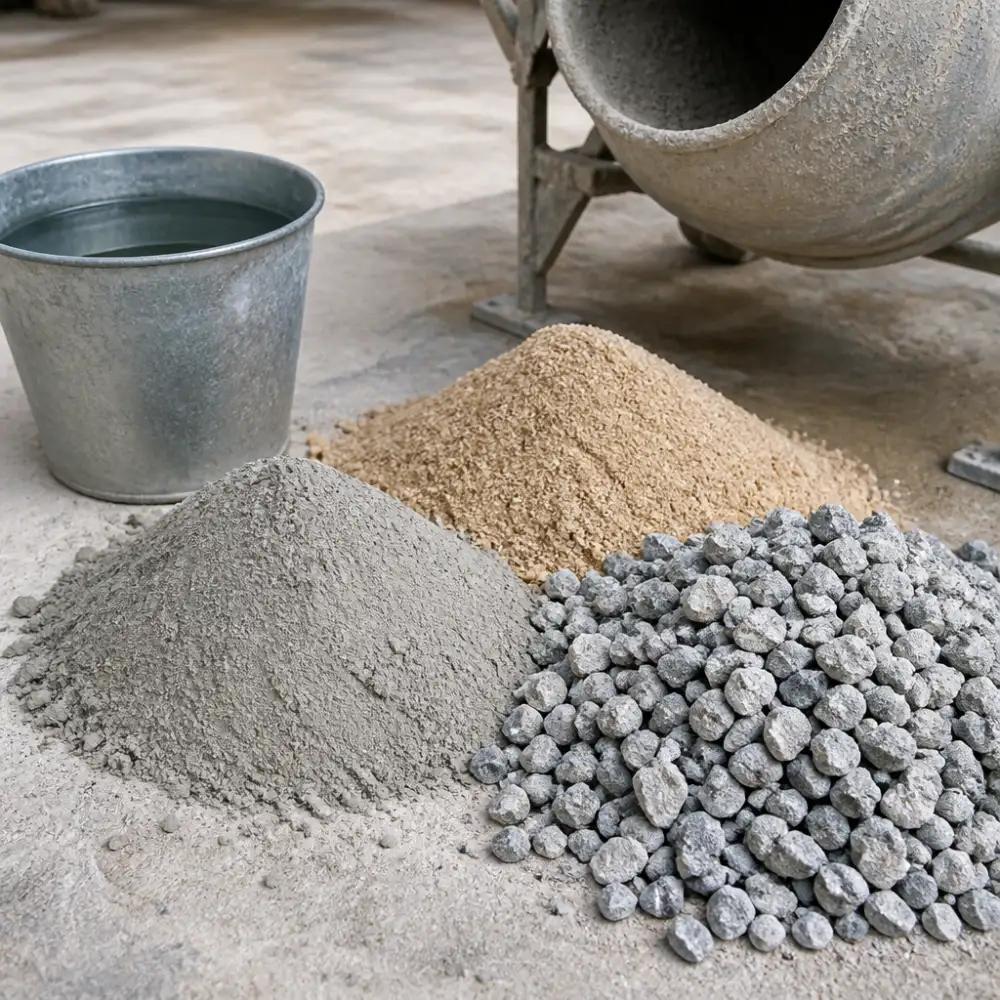
Basic Formula for Cement, Sand and Aggregate Calculation
For a concrete mix such as 1 : 2 : 4, the numbers represent:
1 part Cement : 2 parts Sand : 4 parts Coarse Aggregate
The total proportion is:
1 + 2 + 4 = 7 parts
For estimating materials, the wet volume of concrete is converted into dry volume.
A commonly used estimation factor is:
Dry Volume = Wet Volume × 1.54
Therefore, if the required wet concrete volume is 1 m³:
Dry Volume = 1 × 1.54 = 1.54 m³
The dry volume is then divided according to the mix proportions.
Cement Calculation
For a 1:2:4 concrete mix:
Cement = Dry Volume × Cement Ratio / Total Ratio
Therefore:
Cement = 1.54 × 1 / 7
Cement = 0.22 m³ approximately
To convert cement volume into weight, use the commonly adopted cement density of approximately 1440 kg/m³ for estimation.
Therefore:
Cement Weight = 0.22 × 1440
= 316.8 kg
Since one cement bag is generally taken as 50 kg:
Number of Bags = 316.8 / 50
≈ 6.34 bags
So, approximately 6.3 bags of cement are required for 1 m³ of concrete for this illustrative nominal mix.
Sand Calculation for Concrete
For the same 1:2:4 mix:
Sand = Dry Volume × Sand Ratio / Total Ratio
Therefore:
Sand = 1.54 × 2 / 7
= 0.44 m³ approximately
Thus, approximately 0.44 cubic metres of sand is required for 1 m³ of concrete.
The actual quantity may vary depending on moisture content, bulking of sand, aggregate grading and the approved mix design.
Coarse Aggregate Calculation
For a 1:2:4 mix:
Coarse Aggregate = Dry Volume × Aggregate Ratio / Total Ratio
Therefore:
Coarse Aggregate = 1.54 × 4 / 7
= 0.88 m³ approximately
Therefore, approximately 0.88 m³ of coarse aggregate is required for 1 m³ of concrete under this illustrative calculation.
Example: Material Calculation for 10 m³ Concrete
Suppose you need to prepare 10 m³ of concrete using a 1:2:4 nominal mix.
Step 1: Calculate Dry Volume
Wet volume:
10 m³
Dry volume:
10 × 1.54 = 15.40 m³
Step 2: Calculate Cement
15.40 × 1 / 7 = 2.20 m³
Converting to kilograms:
2.20 × 1440 = 3168 kg
Number of 50 kg bags:
3168 / 50 = 63.36 bags
Therefore, approximately 64 bags of cement are required.
Step 3: Calculate Sand
15.40 × 2 / 7 = 4.40 m³
Therefore:
Sand ≈ 4.40 m³
Step 4: Calculate Coarse Aggregate
15.40 × 4 / 7 = 8.80 m³
Therefore:
Coarse Aggregate ≈ 8.80 m³
Cement, Sand and Aggregate Calculation for Plaster Work
Plastering generally does not use coarse aggregate. The main materials are cement and fine sand.
For example, consider plastering an area of 100 m² with a thickness of 12 mm.
First convert thickness into metres:
12 mm = 0.012 m
Wet mortar volume:
100 × 0.012 = 1.20 m³
A dry-volume factor is then applied for mortar estimation. A commonly used factor is approximately 1.33, although the actual factor can vary depending on material and site conditions.
Dry volume:
1.20 × 1.33 = 1.596 m³
For a 1:4 cement-sand plaster mix:
Total ratio:
1 + 4 = 5
Cement volume:
1.596 × 1 / 5 = 0.319 m³
Cement weight:
0.319 × 1440 ≈ 459 kg
Cement bags:
459 / 50 ≈ 9.18 bags
Sand:
1.596 × 4 / 5 = 1.277 m³
Therefore, approximately 9.2 bags of cement and 1.28 m³ of sand are required for this illustrative example.
Cement and Sand Calculation for Flooring Work
Flooring and screed work generally uses cement and sand, while the exact material requirement depends on the specified thickness and mix.
For example, consider a floor area of 50 m² with a cement-sand screed thickness of 40 mm.
Convert thickness:
40 mm = 0.04 m
Wet volume:
50 × 0.04 = 2.00 m³
For estimation, assume a dry-volume factor of 1.33:
Dry Volume = 2 × 1.33 = 2.66 m³
For a 1:4 cement-sand mix:
Cement:
2.66 × 1 / 5 = 0.532 m³
Cement weight:
0.532 × 1440 ≈ 766 kg
Cement bags:
766 / 50 ≈ 15.3 bags
Sand:
2.66 × 4 / 5 = 2.128 m³
Therefore, the estimated requirement is approximately 16 bags of cement and 2.13 m³ of sand.
Concrete Mix Ratio Examples
Different construction applications can use different mix proportions. Some commonly encountered nominal proportions include:
| Mix Ratio | Cement | Sand | Aggregate |
|---|---|---|---|
| 1:2:4 | 1 | 2 | 4 |
| 1:1.5:3 | 1 | 1.5 | 3 |
| 1:3:6 | 1 | 3 | 6 |
These ratios are provided as calculation examples. For structural RCC work, the concrete should generally be produced according to the approved design mix and project specifications, rather than selecting a ratio solely from a general table.
Important Points for Material Estimation
While calculating cement, sand and aggregate, keep the following points in mind:
1. Consider Dry Volume
Concrete and mortar ingredients have voids between particles. Therefore, dry material volume is greater than the finished wet volume.
2. Check Sand Moisture
The volume of sand can change because of moisture and bulking. Site conditions should therefore be considered during procurement and batching.
3. Use Actual Mix Design for RCC
For structural concrete, material quantities should be based on the approved mix design, including cementitious materials, water, aggregates and admixtures.
4. Account for Wastage
A suitable allowance for handling and site wastage may be considered depending on the project and method of work.
5. Check Cement Bag Weight
In India, cement is commonly supplied in 50 kg bags, but the actual packaging should always be checked before calculation.
Shuttering Quantity Calculation: Complete Guide with Formwork Calculator
Online Cement, Sand and Aggregate Calculator
Our online calculator can simplify the calculation process. Enter the required concrete volume, cement ratio, sand ratio and aggregate ratio. The calculator calculates the estimated quantity of cement, sand and coarse aggregate.
The calculator uses:
Dry Volume = Wet Volume × 1.54
Cement = Dry Volume × Cement Ratio / Total Ratio
Sand = Dry Volume × Sand Ratio / Total Ratio
Aggregate = Dry Volume × Aggregate Ratio / Total Ratio
For cement conversion:
Cement Bags = Cement Volume × 1440 / 50
This calculator is intended for quantity estimation and should not replace an approved concrete mix design.
Frequently Asked Questions
How do I calculate cement for concrete?
First calculate the dry volume by multiplying wet concrete volume by the applicable dry-volume factor. Then divide the dry volume according to the cement portion of the mix ratio and convert the resulting cement volume into kilograms or bags.
How much sand is required for 1 m³ concrete?
The quantity depends on the concrete mix. For example, for an illustrative 1:2:4 mix using a dry-volume factor of 1.54, the estimated sand requirement is approximately 0.44 m³ per 1 m³ of wet concrete.
How much aggregate is required for 1 m³ concrete?
For an illustrative 1:2:4 mix, the estimated coarse aggregate requirement is approximately 0.88 m³ per 1 m³ of wet concrete using a dry-volume factor of 1.54.
Does plaster require coarse aggregate?
No. Conventional cement plaster generally consists of cement and sand, along with water and any specified additives. Coarse aggregate is not normally included in ordinary plaster mortar.
Can this calculation be used for RCC?
The calculator can be used for preliminary estimation, but structural RCC should be based on the approved mix design and project specifications rather than relying solely on a nominal ratio.
Cement, Sand & Aggregate Calculator
Calculate estimated cement, sand and coarse aggregate required for concrete.
Conclusion
Accurate cement, sand and coarse aggregate calculation is essential for efficient construction planning. By understanding wet volume, dry volume, mix ratios and material conversion, engineers, contractors and site supervisors can estimate material requirements more effectively.
For concrete, calculate the dry volume first and then distribute it according to the cement, sand and aggregate proportions. For plaster and flooring, calculate the mortar volume based on the area and thickness and then divide it according to the cement-sand ratio.
 20
20
 620
620
 20
20
Hi, I’m Vivek Mishra, Founder of TheTechFace. I am a Civil Engineer and digital content creator with a B.Tech from SRM University (2013) and an MBA (2023). My passion for technology and blogging began during my college years, leading me to create several websites and online platforms.
With over a decade of experience in both engineering and blogging, I write about Technology, AI, Gadgets, Cricket, Civil Engineering, Business, SEO, and digital trends. Through TheTechFace, my goal is to share practical, informative, and easy-to-understand content that helps readers stay informed and make better decisions in a rapidly evolving digital world.