

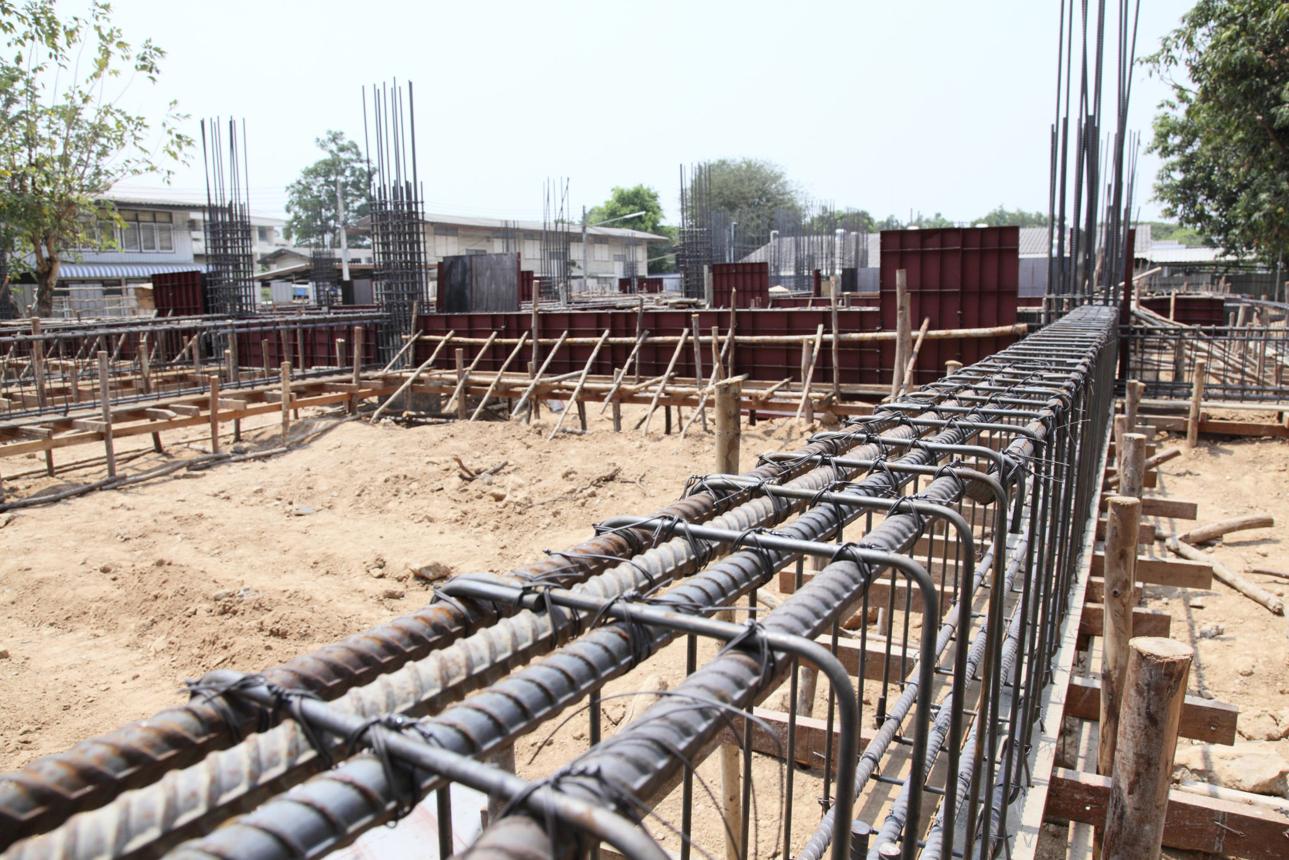
So far, we have discussed the formulas used in Bar Bending Schedule Calculation. However, formulas alone do not provide a complete understanding of reinforcement detailing. For that reason, practical examples are extremely important.
In real construction projects, each structural member has a unique reinforcement arrangement. A beam transfers loads horizontally, whereas a column carries loads vertically. Similarly, a footing distributes the building load safely to the soil. Because of these differences, the cutting length calculation changes from one structural member to another.
The following examples explain the complete process in a simple and practical manner.
Bar Bending Schedule (BBS): A Complete Practical Guide for Civil Engineers
Example 1: Beam Bar Bending Schedule Calculation
Among all RCC members, beams are one of the most common structural elements. Their primary function is to transfer slab loads to columns. Since beam reinforcement generally extends into the supporting columns, engineers must include development length while calculating the cutting length.
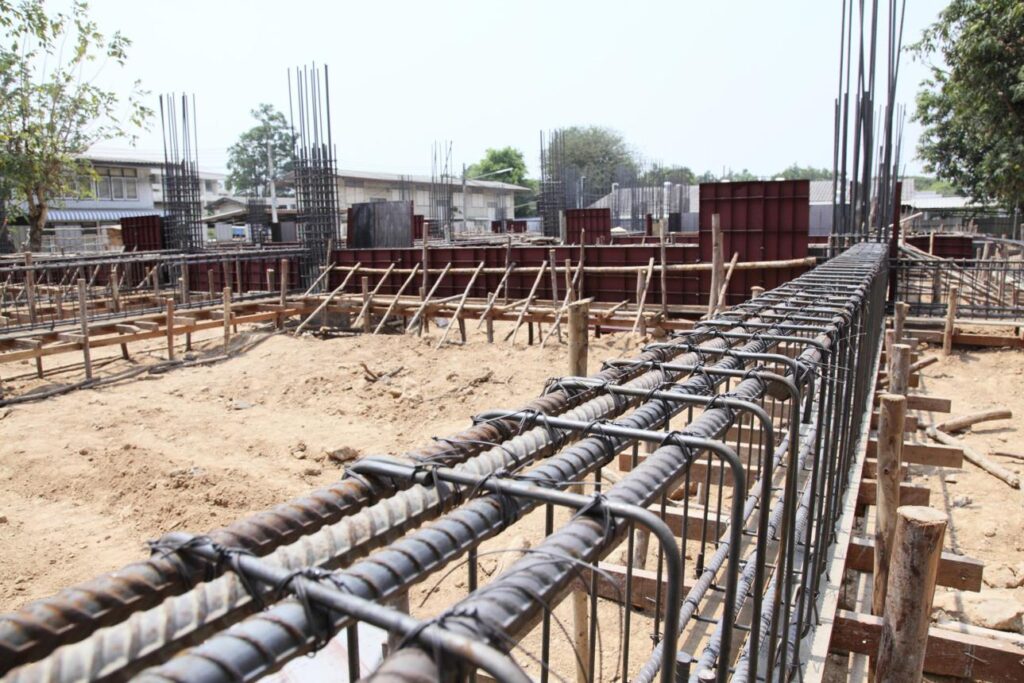
Let’s consider a typical RCC beam.
Given Data
- Beam Size = 300 mm × 500 mm
- Beam Length = 5.0 m
- Main Bar Diameter = 16 mm
- Clear Cover = 25 mm
- Development Length = 50d
Calculate Development Length
According to standard practice, the development length is calculated by multiplying the bar diameter by the specified development factor.
Development Length
= 50 × 16
= 800 mm
= 0.80 m
Calculate Cutting Length
At this stage, the development length must be added at both ends of the beam reinforcement.
Cutting Length
= Beam Length + Development Length + Development Length
= 5.00 + 0.80 + 0.80
= 6.60 m
As a result, each beam bar requires a cutting length of 6.60 m.
Calculate Total Reinforcement Length
Suppose four main bars are provided in the beam.
Total Length
= 4 × 6.60
= 26.40 m
Calculate Steel Weight
Next, determine the unit weight of the reinforcement bar.
Unit Weight
= D² ÷ 162
= 16² ÷ 162
= 1.58 kg/m
Now calculate the total steel weight.
Steel Weight
= 26.40 × 1.58
= 41.71 kg
Therefore, approximately 42 kg of steel is required for the beam’s main reinforcement.
Why This Calculation Matters
Without considering development length, the steel quantity would be underestimated. Consequently, the actual reinforcement available on site may be insufficient. By calculating the cutting length correctly, engineers can avoid material shortages and improve construction quality.
Bar Bending Schedule Calculation Step by Step: Complete Guide for Civil Engineers
Example 2: Column Bar Bending Schedule Calculation
Unlike beams, columns are vertical members that transfer loads from the superstructure to the foundation. Since column reinforcement usually continues between floors, accurate cutting length calculation becomes even more important.
For this example, consider a typical RCC column.
Given Data
- Column Size = 300 mm × 450 mm
- Column Height = 3.0 m
- Main Bar Diameter = 16 mm
- Number of Bars = 8
- Development Length = 50d
Calculate Development Length
Using the same formula:
Development Length
= 50 × 16
= 800 mm
= 0.80 m
Calculate Cutting Length
In column reinforcement, development length is required at both the top and bottom ends.
Cutting Length
= Column Height + Top Development Length + Bottom Development Length
= 3.00 + 0.80 + 0.80
= 4.60 m
Accordingly, the cutting length of one column bar is 4.60 m.
Calculate Total Length
Since eight bars are provided:
Total Length
= 8 × 4.60
= 36.80 m
Calculate Steel Weight
Using the unit weight of a 16 mm diameter bar:
Steel Weight
= 36.80 × 1.58
= 58.14 kg
In other words, the column requires approximately 58 kg of reinforcement steel.
Why This Calculation Matters
Many site engineers focus only on the clear height of the column. Nevertheless, reinforcement detailing requires additional length for anchorage and continuity. Ignoring these provisions can lead to incorrect quantity estimates and procurement issues.
Example 3: Footing Bar Bending Schedule Calculation
A footing forms the base of the structure and transfers loads safely to the ground. Unlike beam and column reinforcement, footing bars are generally placed in two directions to distribute loads evenly.
Before calculating the steel quantity, engineers must first determine the effective dimensions after deducting concrete cover.
Given Data
- Footing Size = 2.0 m × 2.0 m
- Clear Cover = 50 mm
- Reinforcement Diameter = 12 mm
- Bar Spacing = 150 mm c/c
Calculate Effective Length
The concrete cover must be deducted from both sides.
Effective Length
= 2000 − (2 × 50)
= 1900 mm
= 1.90 m
Calculate Number of Bars
Now determine the required number of bars.
Number of Bars
= (1900 ÷ 150) + 1
= 14 Bars
Since reinforcement is placed in both directions, the total number of bars becomes:
Total Bars
= 14 + 14
= 28 Bars
Calculate Cutting Length
Because these bars are straight, the cutting length is equal to the effective length.
Cutting Length
= 1.90 m
Calculate Total Reinforcement Length
Total Length
= 28 × 1.90
= 53.20 m
Calculate Steel Weight
Unit Weight of 12 mm Bar
= 0.888 kg/m
Steel Weight
= 53.20 × 0.888
= 47.24 kg
Consequently, the footing requires approximately 47 kg of reinforcement steel.
Why This Calculation Matters
Footings often contain a large quantity of reinforcement. Even a small error in bar spacing or cutting length can significantly affect the overall steel requirement. Therefore, careful calculation helps reduce wastage and improves cost control.
Key Takeaways from These Examples
At first glance, Bar Bending Schedule Calculation may appear complicated. Once the process is broken into smaller steps, however, the calculations become much easier to understand.
While beam reinforcement requires development length at both ends, column reinforcement needs additional length for continuity and anchorage. Footing reinforcement, on the other hand, depends primarily on effective dimensions and bar spacing.
Most importantly, accurate cutting length calculations help engineers estimate steel quantities correctly. As a result, projects experience fewer material shortages, reduced wastage, and better cost management. Ultimately, a well-prepared Bar Bending Schedule improves construction efficiency and ensures that reinforcement work is executed according to design requirements.
 20
20
 620
620
 20
20
Hi, I’m Vivek Mishra, Founder of TheTechFace. I am a Civil Engineer and digital content creator with a B.Tech from SRM University (2013) and an MBA (2023). My passion for technology and blogging began during my college years, leading me to create several websites and online platforms.
With over a decade of experience in both engineering and blogging, I write about Technology, AI, Gadgets, Cricket, Civil Engineering, Business, SEO, and digital trends. Through TheTechFace, my goal is to share practical, informative, and easy-to-understand content that helps readers stay informed and make better decisions in a rapidly evolving digital world.